If you are home shopping in Powhatan, one listing might show a neighborhood home on a quarter-acre style lot while another offers several acres, a well, and a private road. That can feel confusing if you are trying to compare homes that are all in the same county. The good news is that Powhatan follows a pretty clear housing pattern, and once you understand it, listings start to make more sense. Let’s dive in.
Powhatan housing at a glance
Powhatan County is a low-density market shaped by land, road access, and long-term planning. The county has 32,591 residents across 260.2 square miles, with 12,468 housing units, a 93.2% owner-occupied rate, and a median owner-occupied home value of $416,000.
Just as important, the county’s housing stock is mostly detached homes. Powhatan’s 2021 comprehensive plan reports that 93.9% of housing units were single-family detached, compared with 2.0% attached, 3.1% mobile homes, and 1.0% multifamily. In simple terms, Powhatan reads much more like a single-family home market than a townhome or apartment market.
Why listings vary across Powhatan
A big reason Powhatan listings feel so different is the county’s planning approach. Powhatan is built around preserving rural character while directing more intensive growth into designated growth areas such as Crossroads, Village, Route 60 Corridor East, Route 711 Village, and Courthouse Village.
That means the home you see near a growth area may look and feel very different from a home deeper into the rural parts of the county. In one part of Powhatan, you may find a more neighborhood-style setting with smaller lots and public utilities. In another, you may see larger parcels where acreage, septic, wells, and access matter more than the house style itself.
Common Powhatan housing styles
Ranch and two-story homes
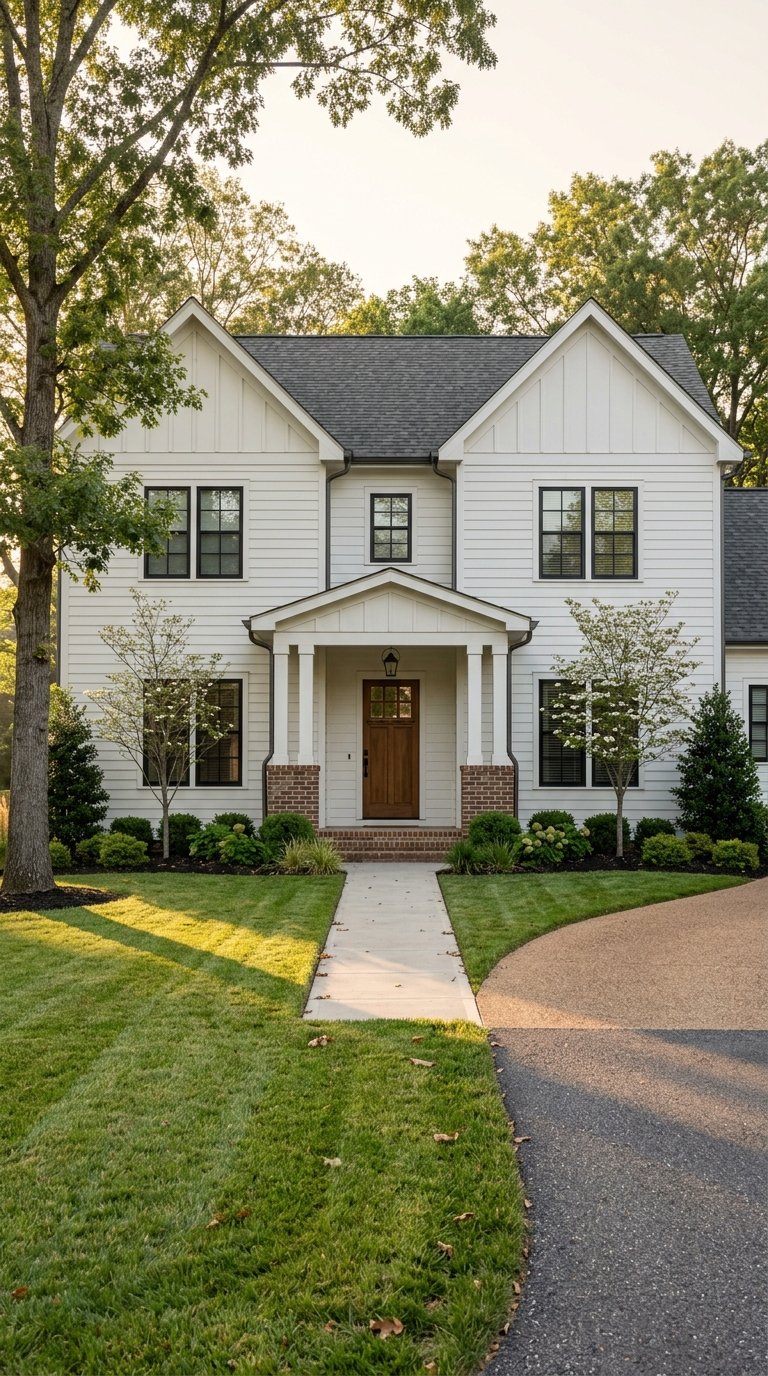
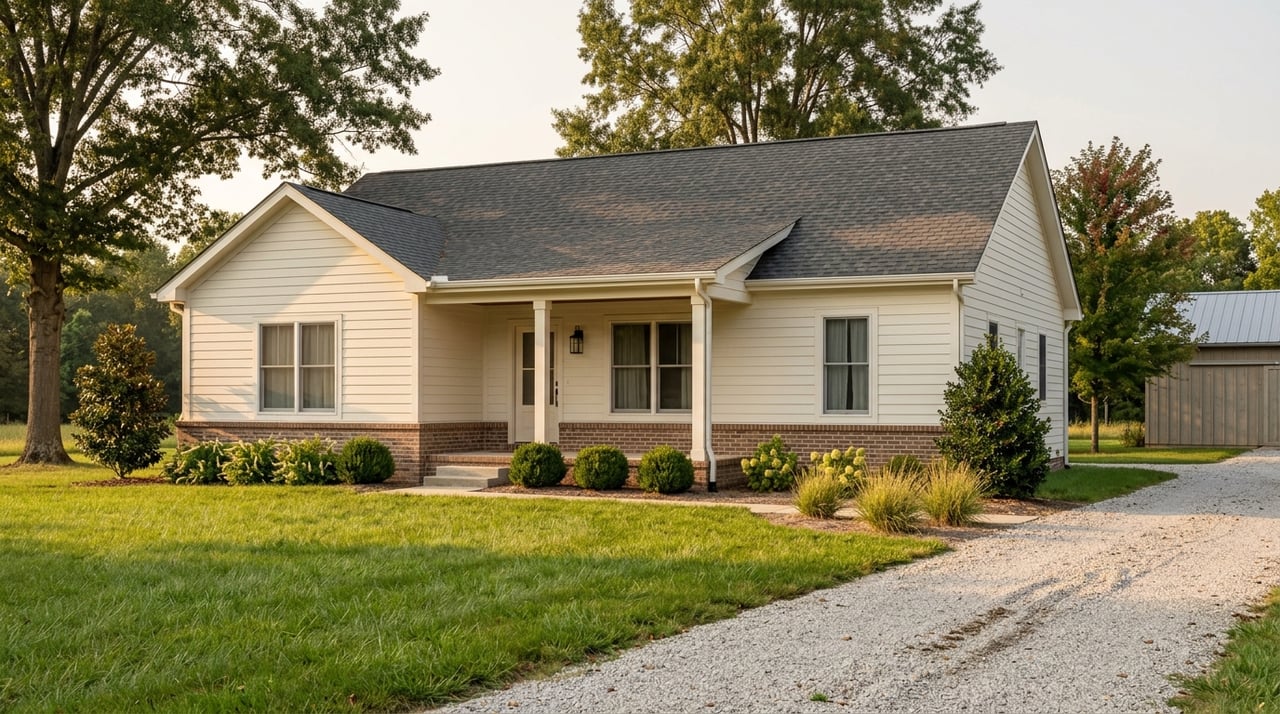
Because detached homes dominate the county, buyers will most often come across standalone ranches and traditional two-story homes. These are the most familiar home types in ordinary residential listings and reflect the county’s overall housing profile.
In practical terms, this means many Powhatan buyers are choosing between home layout, lot size, and location rather than between dense housing formats. If you are used to shopping in more suburban markets, the style names may feel familiar, but the land attached to the home may be very different.
Village and subdivision homes
In Powhatan’s village-growth districts, the county plans for more compact suburban or urban-style development. These areas are governed by local rules for minimum lot size, setbacks, and overall housing density.
In the Route 60 East special-area plan, village-residential lots can average from about one-quarter acre to two acres, with gross density of roughly one-half to four units per acre. Public sewer and water are expected in these areas, and the county confirms that water and sewer are available along the Route 60 corridor from the county line to Flat Rock, with sewer also available in the courthouse area and portions of Route 60.
For you as a buyer, that often means less land to maintain and a more neighborhood-style setup. It can also mean a different utility picture than you would find on a rural parcel.
Mini-farm and rural residential homes
If you are drawn to a semi-rural feel, Powhatan’s Rural Residential areas are an important category to understand. The county comprehensive plan describes these as existing subdivisions with lots ranging from two to seven acres.
The same plan says new residential development in these areas should generally follow conservation or medium-lot patterns of five acres or more, with a maximum recommended density of one unit per five acres. In everyday terms, this is the range where many buyers start to think of a property as a mini-farm, hobby acreage, or a home with room to spread out.
Larger acreage and farm-style parcels
At the larger end of the market, Powhatan’s zoning tools move into much bigger minimums. County board materials list A-10 with a 10-acre minimum lot size, and county ordinance materials describe RR-5 as 5 acres.
There are also land-use thresholds that matter when you are evaluating farm-style or wooded land. Land-use deferral requires at least 5 acres for agriculture and 20 acres for timber, and a new Agricultural & Forestal District requires a combined 200 acres among adjacent landowners. If a listing mentions acreage, farmette, or working land, these are the kinds of local numbers that help explain what you are seeing.
Typical lot sizes in Powhatan
The easiest way to think about lot sizes in Powhatan is by lifestyle.
- About one-quarter acre to two acres often points to village-growth or smaller subdivision settings
- Two to seven acres often lines up with rural residential or mini-farm style properties
- Five acres or more often reflects a more rural development pattern
- Ten acres or more usually signals a larger acreage property where land use and access become major questions
This is not a one-size-fits-all rule for every listing, but it is a helpful local framework. Powhatan’s plans and ordinances are built around this same spectrum.
What acreage really means
Acreage can be one of the most misunderstood parts of a Powhatan listing. A parcel may sound large on paper, but the usable or buildable portion may be smaller depending on road easements, rights-of-way, or other site limits.
Current county planning discussion says lot area excludes public street rights-of-way or private road easements, and in some districts floodplain acreage is also excluded from lot area calculations. So when you compare two five-acre listings, they may not offer the same functional space.
That is why acreage buyers should look beyond the headline number. The layout of the land can matter just as much as the total size.
Powhatan listing terms to watch
Family division and single cut
Powhatan uses special subdivision terms that are important if you are buying land or a home on acreage. County board materials show family-division scenarios such as 2 acres plus 4 acres in A-10 and RR, and 2 acres plus 2 acres in R-2 and R-U.
If a listing says family division, it is smart to confirm whether the acreage shown is the original parent tract or the remainder after a split. That detail can affect how you understand the parcel and its future options.
Conservation subdivision
A conservation subdivision in Powhatan is not always the same as a conventional neighborhood layout. Planning commission minutes from 2024 note that the current minimum lot area for individual lots within a conservation subdivision is 40,000 square feet, and the county had discussed proposals to raise that to one acre.
For you, this means a subdivision can still offer a different land pattern than a typical tight-lot development. Homes may be clustered in a way that preserves more open space across the larger property.
Private roads and public roads
Road type is a major detail in Powhatan, especially for larger parcels. The county says VDOT maintains public roads, but private roads are not maintained by VDOT or the county and are the responsibility of adjoining owners.
That can affect maintenance expectations and day-to-day ownership costs. If you are considering a rural property, road access is one of the first practical questions to ask.
Wells, septic, and utilities
Utility setup often tells you as much about a property as the house itself. Residential permit materials require VDOT entrance approval and a well-and-septic permit unless the dwelling is on public water and sewer.
This is a strong clue that many rural Powhatan homes rely on private systems. By contrast, properties in parts of the Route 60 corridor and courthouse area may have access to public utilities.
How to choose the right fit
The best Powhatan property for you depends on how you want to live and what you want to manage. A smaller lot in a growth area may offer a simpler setup with less land care and more utility convenience.
A two- to seven-acre property may give you the semi-rural feel many buyers want without moving into very large-land responsibilities. Once you get into 10-acre-plus parcels, questions about road type, wells, septic, and land management often become central to the decision.
In other words, lot size is not just about space. In Powhatan, it shapes your daily ownership experience.
If you want help comparing subdivision homes, rural residential properties, or larger acreage parcels in Powhatan, working with a local broker who understands how these details show up in real listings can save you time and help you make a more confident decision. Connect with Hank Cosby for straightforward guidance on Powhatan homes and land.
FAQs
What housing style is most common in Powhatan County?
- Single-family detached homes are by far the most common, accounting for 93.9% of housing units in the county’s 2021 comprehensive plan.
What lot size is typical for neighborhood-style homes in Powhatan?
- In village-growth areas such as parts of Route 60 East, village-residential lots can average from about one-quarter acre to two acres.
What does a rural residential lot usually look like in Powhatan?
- Powhatan’s comprehensive plan describes Rural Residential areas as existing subdivisions with lots ranging from two to seven acres.
What should buyers know about large acreage parcels in Powhatan?
- Buyers should pay close attention to road type, private well or septic needs, and how much of the acreage is actually usable or buildable.
What does family division mean in a Powhatan land listing?
- It refers to a type of lot split used in Powhatan subdivision rules, so you should verify whether the acreage shown is the original tract or the remainder after the split.
Do all Powhatan homes have public water and sewer?
- No. Many rural homes rely on private well and septic systems, while public water and sewer are available in certain areas such as parts of the Route 60 corridor and the courthouse area.