The camera goes in at the cleanout, just past the foundation wall, and for the first twenty feet everything looks like what you'd expect: PVC, smooth and white, installed sometime after 2000. Then the pipe changes. The inspector calls it out on the recording: copper fittings, patched in decades ago. A few more feet and the material changes again, this time to cast iron, pitted and dark, original to the house. Somewhere further down, if the home dates to the 1890s or early 1900s, there may be a stretch of lead service line still doing its job a century after it was laid.
That single run of pipe is a timeline. It tells you who touched this house and when, in a way no seller's memory or paperwork ever will. And in Virginia, that gap between what the pipe knows and what the paperwork tells you is not an accident. It's the law.
Buyer Beware Isn't a Figure of Speech Here
Virginia is a caveat emptor state, which means the legal default runs the opposite direction from what many buyers assume. Sellers are not required to disclose most property defects, and Virginia's Residential Property Disclosure Statement doesn't promise anything about condition at all. Instead, it puts the burden on the buyer to inspect, ask, and verify before the ink dries.
That single fact changes what an inspection is for. In a disclosure state, an inspector's report often confirms or contradicts what the seller already told you. In Virginia, the inspection may be the only real information the buyer gets. There is no form the seller must fill out describing the plumbing history. There is no requirement to mention that the sewer line hasn't been scoped since Eisenhower was president. The form exists to protect the seller's position, not to hand the buyer a roadmap.
Why "I Didn't Know" Actually Works
Here's the part that catches people off guard. Virginia's disclosure framework also protects sellers who genuinely don't know about a defect. If a seller was never aware of a problem, they generally aren't liable for it after closing, even if the buyer discovers it later. That's not sellers gaming the system. In a house built in 1908, the person selling it today may be the third or fourth owner, none of whom ever opened the wall behind the water heater or crawled the full length of the sewer lateral.
Ignorance isn't a loophole in an old Richmond rowhouse. It's often the truth. Which means the buyer isn't up against a seller hiding something. The buyer is up against a house nobody has fully mapped in fifty years, sold by someone with every legal right to say they didn't know either.
Four Owners, Four Decades, One Pipe
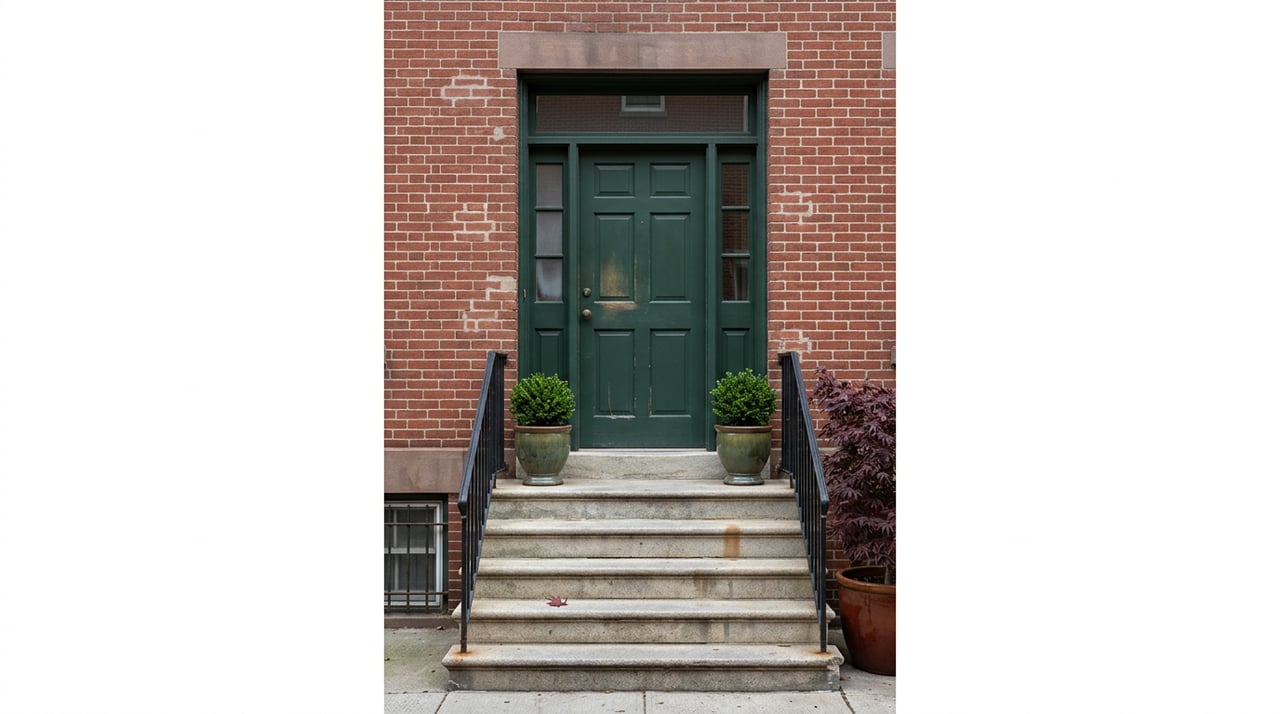
This is why the physical age of Richmond's housing stock matters as much as the legal framework. A typical pre-1920 home in the city's older neighborhoods carries plumbing installed across four separate eras: an original lead water service line from the 1890s, galvanized steel risers added in the 1930s through 1950s, copper branch lines from 1960s and '70s repairs, and PVC patches from the 1990s and 2000s. The drain side tells its own story, with original cast iron stacks, clay sewer laterals, and later PVC repairs layered on top of each other.
The neighborhoods where this shows up most consistently:
- Fan District
- Church Hill
- Jackson Ward
- Oregon Hill
- Museum District
- Byrd Park
In the Fan specifically, some rowhouses share a single sewer lateral with the house next door, a leftover from when the blocks were built as a set. If that shared line fails, the fix isn't just a call to a plumber. It's a conversation with a neighbor about who pays for what.
None of this shows up on a disclosure statement. It shows up on a sewer scope, and only if someone orders one.
What the Full Battery Actually Costs
A standard Richmond home inspection runs $350 to $550 for a typical single-family home. For anything built before 1960, four additional specialty inspections are worth the extra line item:
| Specialty Inspection | Typical Cost | Why It Matters Here |
|---|---|---|
| Sewer scope | $175–$300 | Reveals pipe material and condition along the full lateral, including shared lines |
| Wood-destroying insect (WDI) | $65–$100 | Required by most lenders; past termite evidence is common in older housing stock |
| Chimney inspection | $150–$250 | Checks flue liner and firebox condition on aging masonry chimneys |
| Radon test | $125–$175 | Virginia's geology creates elevated radon potential in basements and crawl spaces |
Add those four to the standard inspection and a buyer on a pre-1960 Richmond home is looking at roughly $800 to $1,300 total. That's real money during an already expensive closing process. It's also a fraction of what a single surprise, like a $15,000 sewer line replacement discovered after closing instead of before, would cost.
Church Hill Adds Its Own Line Item
Church Hill's terrain complicates things further. The neighborhood sits on a ridge above the James River, and homes built into that hillside carry inspection priorities that flat-lot neighborhoods don't. Foundation movement on steep terrain, moisture and drainage patterns in basements built into a slope, and slate roofs that are original to homes from the 1800s and early 1900s all belong on the checklist alongside the plumbing and electrical concerns every older Richmond home shares.
The Clay Doesn't Care Which Neighborhood You're In
Richmond's underlying clay soil is a citywide factor, not a neighborhood-specific one. That soil expands when wet and contracts in dry stretches, and the constant movement stresses the underground water lines connecting older homes to the street. Local plumbers who handle emergency calls in the Fan and Church Hill describe a pattern where a small crack in an aging line becomes a full break once the ground shifts enough, sometimes with no warning before the pipe fails outright. Residential sewer line replacements in the Richmond area typically run between $3,500 and $6,500, a number worth knowing before you're negotiating one during a due diligence period.
The Ten to Fifteen Days That Actually Protect You
Since the disclosure form isn't doing the work, the inspection contingency in a Virginia purchase contract is where the real protection lives. Buyers typically get a defined window after contract ratification to inspect, evaluate, and either move forward, negotiate repairs or credits, or walk away with earnest money returned. That window is the leverage point. It's not a formality to check off before the real transaction begins. In a caveat emptor state, it functionally is the transaction, at least for anyone buying a home old enough to have secrets.
A few things worth doing inside that window on an older Richmond property:
- Ask any inspector candidate directly how many years they've worked in Richmond's historic neighborhoods, and whether they have hands-on experience with knob-and-tube wiring, galvanized plumbing, and original masonry chimneys
- Order a sewer scope even if it's not required, especially on Fan District or Church Hill rowhouses where shared laterals are common
- Ask the seller directly whether they know if the sewer line is shared with a neighboring property, since that question isn't required on any disclosure form but can save a future headache
- Budget for the full specialty battery on anything built before 1960, not just the standard inspection
Waiving the inspection contingency to make an offer more competitive is a real strategy in a tight market. In most states, that trade-off means giving up a second layer of protection on top of disclosure. In Virginia, on a home built before your grandparents were born, it can mean giving up the only layer you had.
A Short FAQ
Does Virginia require sellers to disclose known plumbing or electrical problems? No. Virginia's disclosure statement tells buyers the seller isn't making representations about the property's condition and that due diligence is the buyer's responsibility.
If a seller genuinely didn't know about a defect, can I still hold them accountable after closing? Generally, no. Sellers who were unaware of a defect are typically not liable for it once discovered, which is part of why independent inspection matters so much here.
Is a sewer scope really necessary if the home already passed a general inspection? On anything built before 1960 in Richmond's older neighborhoods, yes. A general inspection doesn't run a camera through the sewer lateral, and that's exactly where the oldest, least visible problems tend to live.
Buying an older home in Richmond means buying its history along with its address, and that history doesn't come with a warranty. What it comes with is a window, usually ten to fifteen days, to find out what you're actually getting before it's yours. Spend that window well.
If you're evaluating an offer on a Fan District rowhouse, a Church Hill property, or any older Richmond home and want a second opinion grounded in what actually shows up in this market, Hank Cosby has spent decades working these neighborhoods and can walk through what your inspection findings really mean before you decide.